Call of Antia: Match 3 RPG
- 4.4
- Rating
- 1.00M
- Installs
- Free
- Price

 Analysis by App-foxy
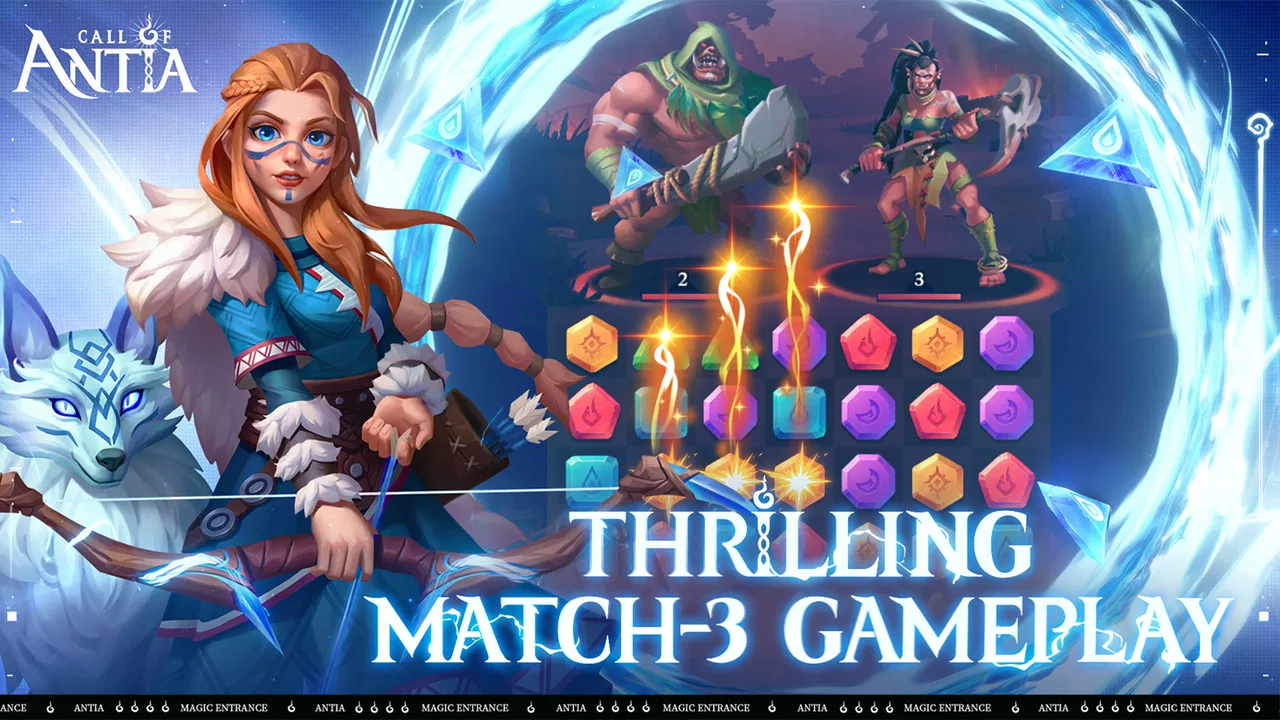
I spent time with Call of Antia: Match 3 RPG as a mobile role-playing game built around match-three battles, and its main appeal became clear quickly: each puzzle move is also a combat decision. You are not simply clearing colorful tiles for a score. You are trying to create useful matches, charge your heroes, manage the pace of a fight, and decide when to take a safe move instead of chasing a more dramatic one.
That combination gives the game a more active feel than a standard puzzle title, while keeping the basic controls easy to understand. It is free to start, aimed at players aged 10 and over, and comes from FunPlus International AG. The game was released on December 16, 2021, and its current version is 4.3.21 for devices running Android 7.0 or later. Those details matter because this is not a tiny one-evening puzzle experiment; it is designed as a longer-running RPG experience with battles, goals, and repeated progression.
How the first goals shape the opening hours
The early game works best when I treat every battle as a small lesson rather than a test of reflexes. Matching tiles is familiar, but the role-playing layer gives each move a purpose. A match can help clear space, build toward an attack, or prepare a hero for a more important turn. That makes the opening goals feel more meaningful than simply reaching the next stage.
You May Also Like

 Blood Strike: 2.5 Anniversary
Blood Strike’s Loadouts Turn Every Drop Into a Tactical Gamble
A close look at Blood Strike’s custom loadouts: how fast access to signature weapons reshapes its battle royale rhythm, rewards preparation, and narrows the gap between fights.

 Pandora - Music & Podcasts
Pandora’s Music Is Easy to Start, but Harder to Recover
Pandora’s strength is its low-effort path from a seed to a station. Its weak spot is how much confidence it asks you to place in connection, setup, and quiet recovery.

 8 Ball Pool
 Is Built on Rivalries, Rematches, and Routine
A close look at the rivalries, rematches, shared routines, and unanswered safety questions that turn a quick pool match into a persistent mobile community.

 Samsung Music
’s Quiet Strength Is Playing What You Already Own
Its reach comes less from spectacle than from dependable access to a personal library. That simplicity is both the app’s strongest retention engine and its ceiling.

 AccuWeather: Weather Radar
AccuWeather Review: A Quick, Clear Forecast for Everyday Decisions
For everyday plans, the best forecast is the one you can understand quickly. AccuWeather makes rain timing, radar, and local conditions easy to act on, with a few trade-offs.

 Hill Climb Racing
Why Hill Climb Racing Still Turns Crashes Into One More Run
A tiny car, a bumpy hill and one more upgrade: Hill Climb Racing keeps resurfacing because its simple chaos makes every near-miss feel personal.
More From Our News Desk



I also like that the game gives me an immediate reason to look beyond the board. The puzzle is the action, but the heroes are the long-term project. This creates a useful rhythm: enter a fight, read the board, make matches, watch the team contribute, and then think about how the result affects the next challenge. For a new player, that loop is easy to grasp without requiring knowledge of traditional role-playing systems.
The strongest early habit is to stop making matches automatically. A quick match may be available, but a slightly slower choice can open the board or set up a better chain. I found that the game becomes more satisfying when I look at the next move before committing to the current one. That is a small adjustment, but it separates the puzzle layer from simple tapping.
The dragon theme also gives the opening a clear identity. Battles feel like encounters inside a larger fantasy setting rather than disconnected puzzle rounds. I would not choose it if I wanted a purely quiet matching game, because the role-playing presentation and combat objectives are central to the experience. For players who enjoy seeing puzzle decisions translated into attacks and abilities, that extra layer is the reason to stay.
One practical use case is a short break during the day. I can play a battle without needing a long uninterrupted session, then leave once the encounter is finished. At the same time, the broader progression gives me a reason to return later instead of making every session feel disposable. That balance is one of the game’s most approachable qualities.
What progress feels like beyond simply winning
Call of Antia communicates progress through several connected signals: completing battles, improving a team, reaching new objectives, and becoming more comfortable with the board. The important point is that progress is not only about a bigger number. I can feel improvement when I recognize a dangerous board position earlier or understand which move will help my team rather than merely remove tiles.
That makes the game more interesting for players who enjoy gradual mastery. A beginner may focus on the most obvious match, while a more experienced player starts considering space, timing, and the order in which effects should happen. The same basic puzzle rules can therefore produce different decisions as the player becomes more familiar with the combat layer.
My advice is to avoid treating every available upgrade as equally urgent. In a game that combines heroes and puzzle battles, it is easy to spread attention too widely. I get more value from watching which characters actually fit the way I play. If I prefer safe, controlled boards, I should favor choices that support that style instead of chasing every new possibility simply because it appears.
This is also where the game’s role-playing identity becomes more noticeable than in ordinary match-three alternatives. A conventional puzzle game usually measures success through scores, stages, or special pieces. Here, the board is tied to a party and a fantasy battle. That gives each improvement more context, although it also means there are more things to think about before a session feels fully efficient.
The game has a 4.4 average from around 344 thousand ratings, with more than a million installs. I read those figures as evidence that the basic blend has broad appeal, not as a guarantee that every player will enjoy the long-term structure. Someone who wants a compact puzzle with no team decisions may find the added systems distracting, while a role-playing fan who likes casual controls may find the mixture attractive.
Why the difficulty curve rewards patience
The difficulty is most enjoyable when I accept that a failed or awkward battle can reveal something useful. Early confidence comes from making obvious matches, but later pressure comes from choosing between immediate damage and better board control. That shift is important: the challenge is not only finding a match, but deciding what kind of match the situation demands.
When a board looks crowded or an opponent is close to acting, I prefer clearing a dangerous area over waiting for a perfect combination. This is one of the game’s less obvious lessons. A spectacular move is not always the correct move. Sometimes the best decision is the one that leaves a healthier board for the following turn.
The difficulty also benefits from short-term planning. I try to notice where new tiles are likely to fall and avoid destroying a useful setup too early. That does not turn the game into a fully predictable puzzle, but it gives careful players something to work with. The result is a challenge curve based partly on judgment, not only on stronger enemies or larger requirements.
Players who dislike losing progress may find this style frustrating. The game asks for experimentation, and experimentation sometimes means entering a battle without a perfect plan. I would recommend it to someone who enjoys adjusting after a mistake. I would be more cautious about recommending it to a player who expects every stage to be comfortably solvable on the first attempt.
Its player-versus-player battles add another kind of tension. Against a person rather than a fixed challenge, a safe move can feel less obvious because the opponent may punish a weak board. That competitive element gives the puzzle rules more urgency, but it can also make the experience less relaxing than the story-focused portions. I see the PvP side as something to approach after learning the basic rhythm, not as the best starting point for everyone.
What keeps the loop going—and where it can push too hard
The game’s retention strength comes from the way one goal leads into another. A battle can make me think about my team; the team can make me think about future encounters; a difficult encounter can send me back to the board with a different strategy. This chain is more effective than a simple sequence of unrelated puzzles because each part gives meaning to the next.
There is also a satisfying contrast between quick decisions and long-term planning. In the moment, I am looking for the best match. Between battles, I am considering how to improve my overall approach. That two-speed structure suits mobile play well: a session can be brief, but the game still leaves me with something to think about afterward.
The trade-off is that free-to-play progression can create pressure. In-app purchases range from $0.99 to $104.99 per item, so players should approach the economy carefully and decide in advance whether they want to spend anything. I would not recommend buying simply because a difficult stage has become irritating. The better test is whether the purchase supports a game I am already enjoying, rather than trying to repair a frustrating experience.
This matters especially for younger players. The age rating is Everyone 10+, but the presence of purchases means a family should still discuss spending before handing over the device. The game can be played as a free experience, yet the surrounding progression may make optional purchases feel tempting when a player wants faster improvement or an easier route through a challenge.
Another form of pressure comes from the number of decisions competing for attention. The game is approachable at the board level, but the wider RPG structure asks me to remember team choices, battle priorities, and progression goals. That is a strength for players who like layered systems. It is a weakness for anyone looking for a pure match-three game that can be enjoyed without thinking about a larger plan.
I also think the game is better suited to players who enjoy returning regularly than to those who want a single, self-contained campaign. Its appeal grows through repeated battles and gradual improvement. If I only play once every few weeks, I may spend too much time remembering my priorities. If I return consistently, the familiar loop makes it easier to notice progress and refine my decisions.
How it compares with familiar alternatives
Compared with a standard match-three game, Call of Antia offers more purpose behind each move. The board is not isolated from the rest of the experience; it feeds into heroes, combat, and fantasy progression. That makes it a stronger choice for someone who wants puzzle mechanics with a role-playing frame.
Compared with a traditional mobile RPG, its controls are much more immediate. I do not need to master a complicated action system to participate in battles. The puzzle board remains the main way I influence the fight. However, players seeking deep manual combat or precise real-time movement may find the match-three format too indirect.
It also differs from a purely competitive puzzle game because the fantasy team and longer progression give the battles a broader context. PvP can add excitement, but the game is not only about proving who can make the fastest match. My choices are shaped by the state of my team and by the kind of encounter I am facing.
In everyday terms, I would choose this game over a basic match-three alternative when I want a reason to develop a roster and return to familiar mechanics with new goals. I would choose a simpler puzzle game when I want to relax without considering upgrades, combat priorities, or spending decisions. I would choose a more action-focused RPG when the actual fighting matters more to me than arranging tiles.
Who should play it and who should skip it
I think Call of Antia is a good fit for players who enjoy fantasy settings, short mobile sessions, and puzzles that reward planning. It is especially suitable for someone who likes the idea of an RPG but does not want complex controls. The match-three foundation makes the first steps accessible, while the team and battle structure provide enough texture for longer-term interest.
I would also recommend it to players who enjoy improving through observation. The most rewarding moments are not always dramatic wins. Sometimes it is recognizing why a board went badly, changing the order of your moves, and handling the next encounter more calmly. That kind of progress feels earned because it comes from understanding the game rather than simply tapping faster.
I would skip it if I dislike free-to-play pressure, competitive modes, or games that ask me to manage several connected goals. I would also avoid it if I want a completely offline-feeling puzzle with no fantasy combat identity. The game’s personality depends on the combination, so removing any one of those elements would leave little reason to choose it.
For a first session, I suggest playing slowly and learning the board before worrying about perfect progression. Look for matches that improve the next few moves, not just the one directly in front of you. Once the basic rhythm feels natural, start paying closer attention to how your team and battle choices affect the outcome. That approach makes the early hours less confusing and helps the later difficulty feel like a challenge rather than a wall.
My progression verdict
After spending time with it, I see Call of Antia as a thoughtful match-three RPG rather than a puzzle game with a decorative fantasy skin. Its best idea is the connection between board decisions and role-playing progress. Goals feel more engaging because they lead into battles, progress is visible through both player skill and team development, and the difficulty becomes more interesting when I plan beyond the immediate match.
The pacing is not perfect for everyone. The broader progression can feel busy, PvP raises the pressure, and the purchase range means free players should remain deliberate about how they engage with the economy. Those are not minor details, especially for families or anyone who prefers a relaxed, uncomplicated game.
Still, I would recommend it to a friend who wants a mobile RPG that can be played in manageable sessions and who enjoys making careful puzzle choices. The free entry point makes it easy to try, while the 10+ rating and accessible controls keep the opening approachable. My final view is simple: the game sustains interest best when you treat each match as both a puzzle and a step in a larger plan. If that combination sounds appealing, FunPlus International AG’s game is worth exploring; if you only want quick tile matching with no long-term pressure, a simpler alternative will probably suit you better.
FAQs for Call of Antia: Match 3 RPG
01What is Call of Antia: Match 3 RPG?
Call of Antia: Match 3 RPG is a mobile role-playing game that combines match-3 puzzle battles with hero collection, exploration, and fantasy storytelling. You create teams of heroes, match colored tiles to attack enemies, and use character abilities at the right moment. Outside combat, you can upgrade heroes, unlock new content, and take part in different game modes.
02How does the combat system work in Call of Antia?
Battles are based on matching three or more tiles of the same color. Each color is connected to specific heroes on your team, so making matches charges their attacks and special abilities. Larger combinations can create powerful effects, while matching tiles strategically is important for dealing damage, healing allies, and controlling the battlefield. Team composition also has a major impact on results.
03Is Call of Antia: Match 3 RPG free to play?
Call of Antia: Match 3 RPG can be downloaded and played for free, but it includes optional in-app purchases. These purchases may provide resources, summoning opportunities, energy, upgrade materials, or other conveniences. Progress is possible without spending money, although free players may need more patience because timers, limited resources, and difficult stages can make advancement slower.
04Does Call of Antia require an internet connection?
An internet connection is generally required for Call of Antia because the game includes online features such as account progression, events, rewards, hero summoning, purchases, and synchronization. Some portions may appear accessible while offline, but the experience is designed around connected play. A stable connection is recommended to avoid lost progress, loading problems, or interruptions during battles.
05What should new players know before downloading Call of Antia?
New players should expect a game focused on repeated progression, hero upgrades, team building, and resource management rather than a short, one-time puzzle experience. The later stages can become challenging, and collecting stronger heroes may involve chance-based summoning. Daily activities, events, and careful use of resources are important, while optional purchases can accelerate progress but are not strictly required.
Pros
- Combines match-3 puzzles with RPG progression and strategic battles.
- Large roster of heroes with distinct skills and team combinations.
- Story campaign offers plenty of stages and goals to complete.
- Guild features add cooperation and extra rewards with other players.
- Regular events provide new challenges and limited-time content.
Cons
- Energy limits can slow progress during longer play sessions.
- Hero upgrades require several resources that may take time to collect.
- Competitive modes can feel difficult without highly developed teams.
- Random tile layouts sometimes make battles depend heavily on luck.
- Frequent rewards and menus can make the interface feel somewhat busy.

Call of Antia: Match 3 RPG
Gallery